Chapter 3: The Whispering Wind
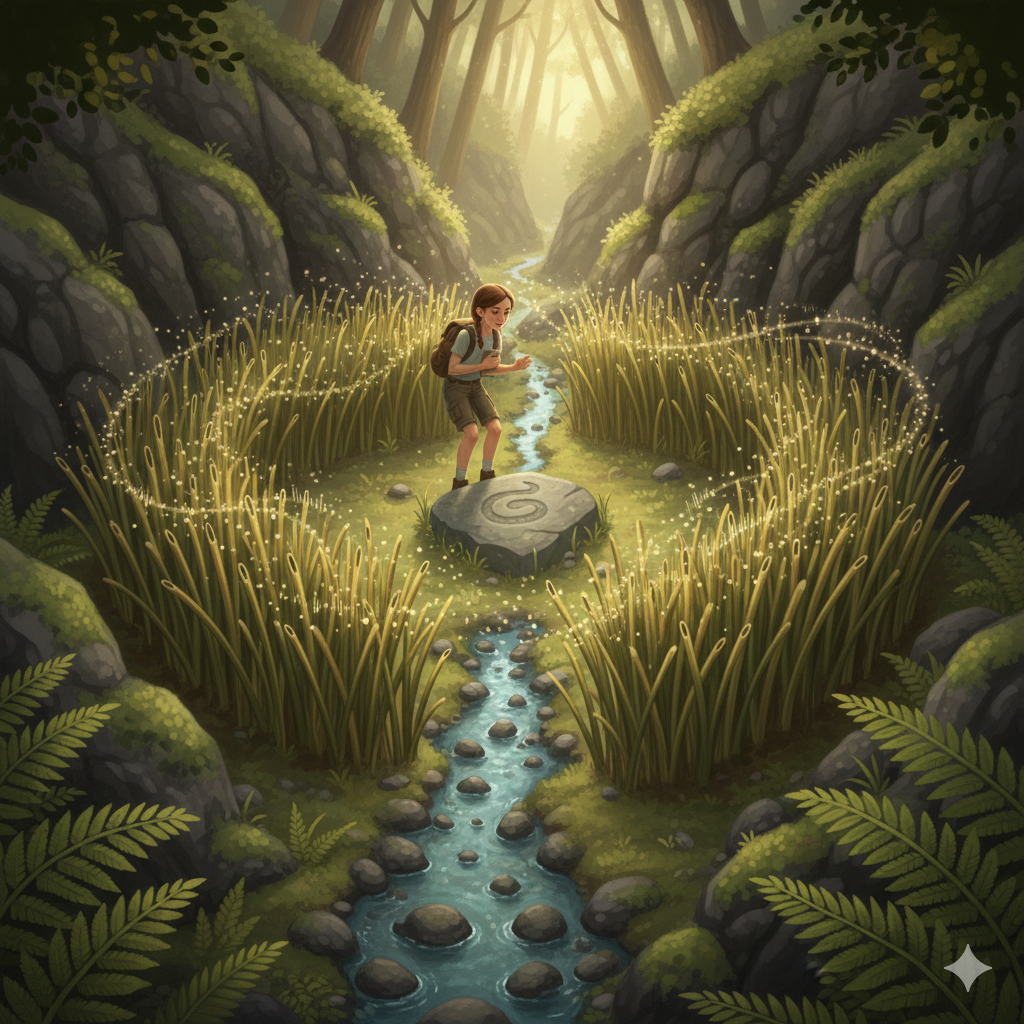
Hours passed. Elara navigated by the sun and her compass, carefully checking her progress against the faded lines of the map. Just as a hint of doubt began to creep in, a new sound reached her ears – a soft, melodic sighing, like wind whispering through reeds. It grew louder, becoming a distinct, almost musical, hum.
“Whisperwind Gully,” she murmured, a thrill shooting through her. Following the sound, she pushed through a thick curtain of ferns and emerged into a small, secluded clearing.
Before her lay a narrow, stony gully, its sides covered in moss and ferns. A tiny, crystal-clear creek trickled through its centre, making a gentle burbling sound. But it wasn’t the creek that was whispering. Tall, slender reeds, unlike any she had ever seen, grew in thick clusters along the gully’s edges. As the wind passed through their hollow stems, they produced the beautiful, haunting sound – a chorus of soft, ethereal whispers.
Elara walked closer, captivated. She noticed that the reeds grew in an unusual circular pattern at one point, forming a natural amphitheatre around a large, flat stone. On the stone, faintly carved, was the same coiled snake symbol from her map.
Chapter 3 Exercise: Figurative Language and Description
Instructions: Identify the type of figurative language used and explain its effect.
- “a soft, melodic sighing, like wind whispering through reeds”
- Type of figurative language:
- Effect:
- “…creating a natural cathedral.” (Refer back to Chapter 2)
- Type of figurative language:
- Effect:
- Describe the sound of the wind in Whisperwind Gully using your own words.